

Inside a Water Softener Installation on a Stroud Rural Property: What the Typical Job Involves, Start to Finish
Water Softener Installation on a Rural Property in Stroud, Innisfil: Well Water, Start to Finish
Published August 23, 2026 · Updated August 23, 2026
A water softener installation on a rural property in Stroud, Innisfil running on well water is typically a one-day job for two people, and the softener itself is the easy part. The water test, the pre-filter ahead of the resin tank, and where the drain line terminates are what decide whether the system still works in year seven. We have pulled out plenty of softeners that were installed correctly and sized wrong. They soften nothing. The homeowner buys salt for a decade and never gets the water they paid for.
- Test the water before anyone quotes a softener. Hardness in grains per gallon, iron, pH and a bacteriological sample from the Simcoe Muskoka District Health Unit. No test, no sizing.
- A softener is installed downstream of the pressure tank and upstream of the water heater, on a bypass loop, with the drain line terminated to an indirect connection with an air gap.
- Softeners handle hardness and modest dissolved iron. They do not handle heavy iron, sulfur smell, tannins or bacteria. Those need separate treatment ahead of the softener.
- Typical installed cost for a mid-range whole-home softener in Simcoe County generally lands in the $1,600 to $2,900 range depending on grain capacity, plumbing access and whether an iron filter or sediment pre-filter is added. Confirm any figure with a written quote.
- Hard well water is the single fastest way to kill a tankless water heater. If you run a Rinnai or Navien on untreated Innisfil well water, the scale gets you long before the electronics do.
What We Found
On rural Stroud and Innisfil wells, the first thing we do is test, not quote. A hardness test in grains per gallon, a check for dissolved iron and manganese, a pH reading, and a reminder to the homeowner to send a bacteriological sample to the Simcoe Muskoka District Health Unit, which handles free private well testing for residents in this region. The chemistry of a well two concessions over can be completely different. Limestone bedrock does not care about property lines.
In the typical version of this job, hardness comes back well into the “very hard” band on the standard Water Quality Association scale, with enough dissolved iron to leave that faint orange tide line inside the toilet tank. Not enough iron to need a full air-injection iron filter. Enough to matter for resin selection.
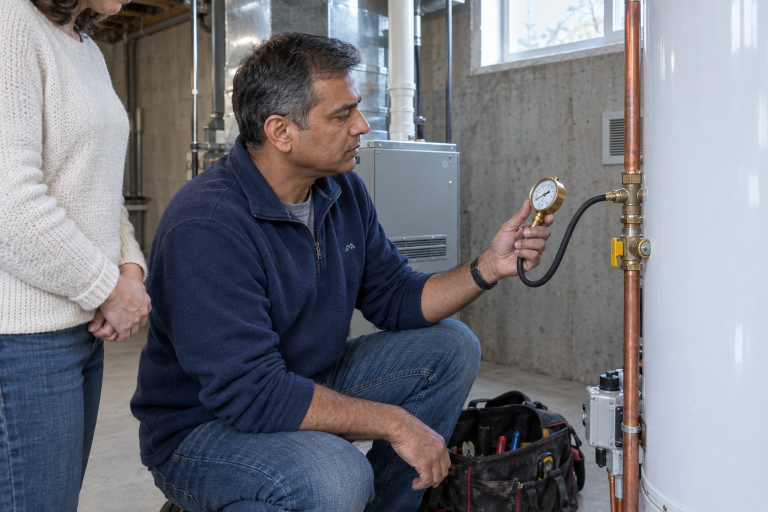
Then we look at the mechanical side. Pressure tank condition and cut-in pressure. Whether there is a sediment filter and if the cartridge has been changed this decade. Whether the old softener was ever on a proper bypass or was plumbed in hard, which is why the previous owner “bypassed” it with a garden hose jumper. We have seen that more than once.
| Hardness (grains per gallon) | Equivalent (mg/L) | What you actually notice at home |
|---|---|---|
| Under 1 | Under 17 | Soft. Soap lathers, no film on glassware. |
| 1 to 3.5 | 17 to 60 | Slightly hard. Faint kettle film after months. |
| 3.5 to 7 | 60 to 120 | Moderately hard. Spotting on dishes, more soap needed. |
| 7 to 10.5 | 120 to 180 | Hard. Scale on aerators, dull laundry, shorter heater life. |
| Over 10.5 | Over 180 | Very hard. Crusted shower heads, scaled heat exchangers, chalk in the kettle within weeks. |
The conversion is fixed: one grain per gallon equals roughly 17.1 mg/L of calcium carbonate. That table is the whole basis for sizing. A softener is not chosen by house square footage. It is chosen by hardness multiplied by how much water the household actually uses between regenerations.
“The most common softener problem we get called out for on Innisfil and Stroud wells is not a broken valve. It is a unit that was sized off a guess. Undersize it and it regenerates constantly, burns salt, and still lets hard water through at peak demand. The homeowner assumes softeners just do not work well out here. They work fine. Somebody skipped the test.”— Matthew Allain, Licensed plumber and owner, Allain Plumbing and Drains
How We Solved It: The Typical Water Softener Installation, Step by Step
A water softener installation on a rural property near Stroud follows the same sequence every time, whether the house is a 1890s farmhouse on the 6th Line or a newer build on the edge of Alcona that happens to still be on a private well. Here is the order of operations.
Test and size before ordering anything
Hardness in grains, iron, pH, and household occupancy. The grain capacity of the unit comes out of that math. We would rather delay the install a day than guess.
Kill power to the well pump, then isolate
Breaker off at the panel. Main shutoff closed. Pressure bled off at the lowest fixture in the house. On a well system you are working against a pressurized tank, not a municipal main, and that surprises people.
Remove the old unit and inspect the line
Twenty-year-old softeners come out heavy and they smell like wet mineral. We cut back to sound pipe and check what the old install did to the surrounding fittings, because galvanized nipples on a hard-water line are usually choked down inside.
Set the sediment pre-filter
On well water we install a sediment filter ahead of the softener as a rule. Sand and fine grit chew resin beds and foul the control valve seals. The filter housing goes where the homeowner can actually reach it, not behind the furnace.
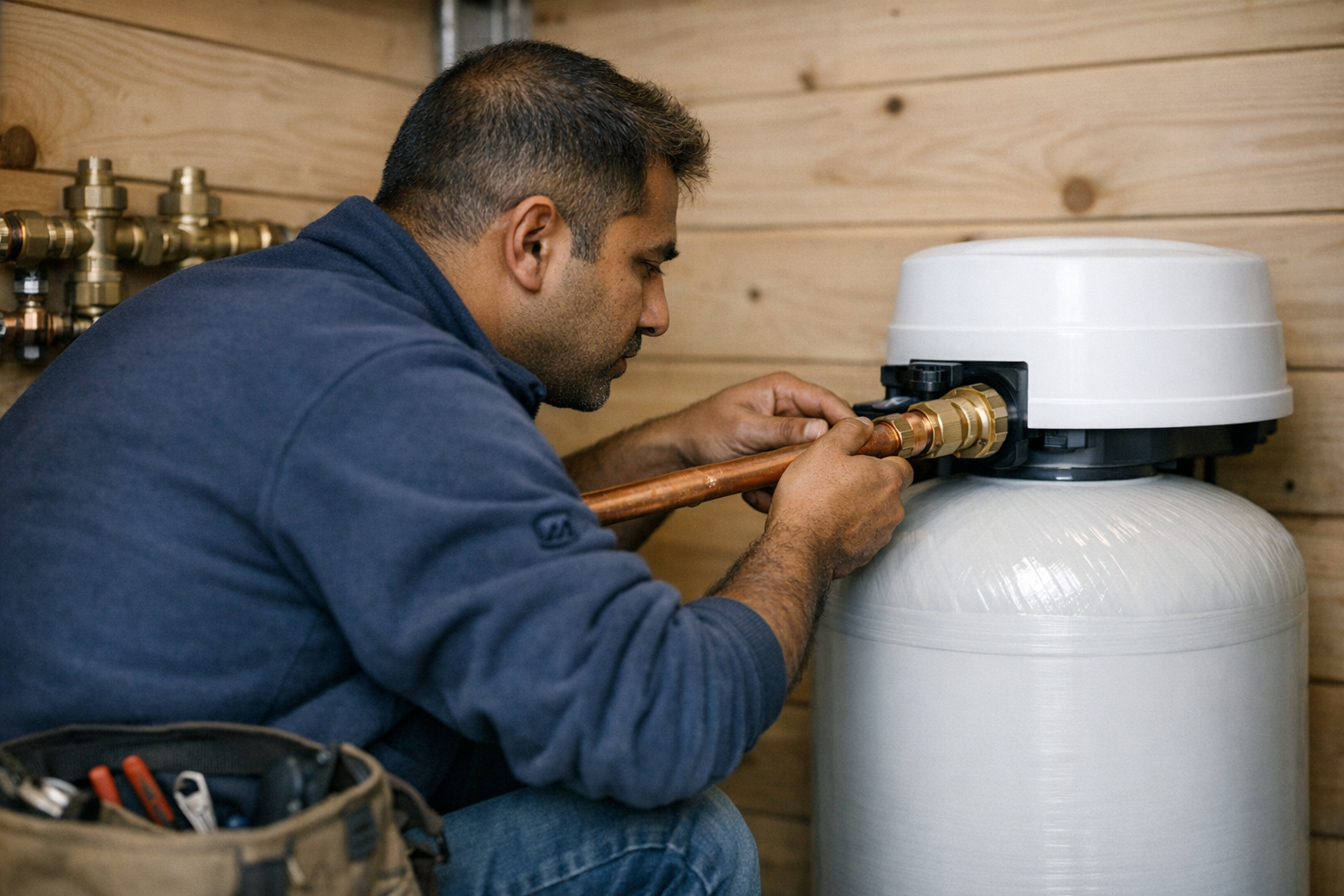
Plumb the softener in on a three-valve bypass
Downstream of the pressure tank, upstream of the water heater. Inlet to inlet, outlet to outlet, never reversed. The bypass lets you take the softener out of service for repair without shutting the house down, and it is the single feature most old installs are missing.
Decide what stays hard
Outdoor hose bibbs and often the barn or garden line stay on unsoftened water so you are not paying salt to water tomatoes. Some homeowners also want one kitchen cold tap left hard for drinking. We tee that off before the softener.
Run the drain line to an indirect connection with an air gap
Regeneration brine has to discharge to drain without any possibility of back-siphonage into the potable system. That means an indirect connection with a proper air gap, secured so the line cannot whip. Confirm the specific termination requirement for your property against the Ontario Building Code and your municipality, especially on septic.
Brine tank, overflow, salt and program
Brine tank set on a level pad with its overflow routed safely. We load salt, program the control head with the measured hardness and the household demand, and set regeneration for the small hours.
Slow fill, purge, manual regeneration, then retest
Repressurize slowly, purge air through every fixture, force one full regeneration cycle, then test the treated water at a tap. If the number does not move, the install is not finished. We do not leave until it does.
A softener goes in after the pressure tank, before the water heater, on a three-valve bypass, with a sediment pre-filter ahead of it and a brine drain terminated to an indirect connection with an air gap. Hose bibbs usually stay on hard water. Sizing comes from a hardness test in grains per gallon, never from square footage.
What This Means for Rural Homeowners in Stroud, Innisfil and Simcoe County
If you bought a rural property between Stroud and Cookstown and inherited a softener you have never touched, the useful move is not buying salt. It is finding out whether the unit is even in service. We regularly find softeners on bypass, salt bridged solid in the brine tank, or a control head that has been stuck in service position for years. Push a broom handle into the salt. If it hits a crust and cracks like lake ice, that is a bridge, and no salt has reached the brine draw in a long time.
The second lesson is about what a softener is not. It is a hardness appliance with a modest tolerance for dissolved iron. It does not remove bacteria, it does not fix a rotten egg sulfur smell, and it does not handle tannins from a shallow well near a wetland. Those are separate stages ahead of the softener. Selling one box to fix five problems is how homeowners end up disappointed and blaming the technology.
| Well water problem | Softener alone? | What it usually needs |
|---|---|---|
| Scale, spotting, poor lather | Yes | Correctly sized ion-exchange softener |
| Light orange staining | Sometimes | Iron-tolerant resin plus sediment pre-filter |
| Heavy iron or manganese | No | Dedicated iron filter ahead of the softener |
| Rotten egg smell | No | Hydrogen sulfide treatment, well investigation |
| Positive bacteriological sample | No | Shock chlorination and retest, guided by the health unit |
| Sand and grit at the aerators | No | Sediment filtration, check well screen and pump depth |
Why this matters more if you have a tankless heater
Untreated hard well water and a tankless water heater are a bad marriage. Scale plates out on the heat exchanger and the unit starts short cycling, throwing flow errors and losing output. We recommend Rinnai or Navien for tankless on well systems specifically because parts are stocked and serviceable in this region. The mistake we see repeatedly is a homeowner buying the cheapest box-store import tankless around the $1,500 mark, then calling us when it errors, and the part is a six-week special order from an importer. A softener protects that investment. So does a Moen Flo smart water monitor if you want early warning on a leak in a crawlspace nobody visits in February.
The DIY line we ask people not to cross
This one is for the capable rural homeowner with a full tool wall in the shop, not for someone who has never sweated a joint. We get two to three emergency calls a month from a half-finished DIY where a shutoff valve was replaced without isolating the main, the valve body broke off in their hand, and there was no way to stop the flow. On a well property that means water moving until somebody finds the pump breaker in the dark. If you are cutting into the line to add a softener loop, know exactly where your isolation point is and prove it holds before the saw comes out.
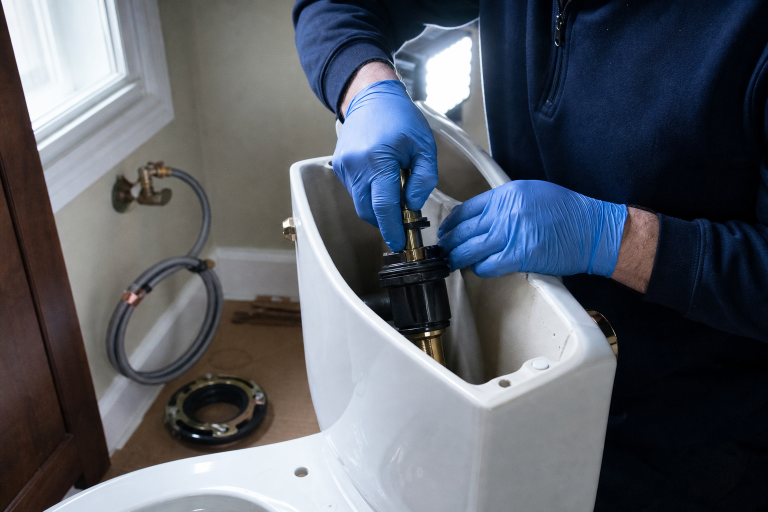
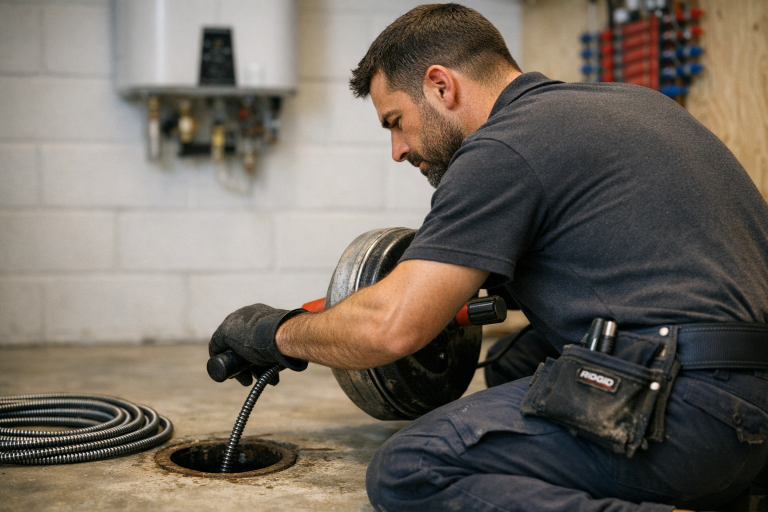
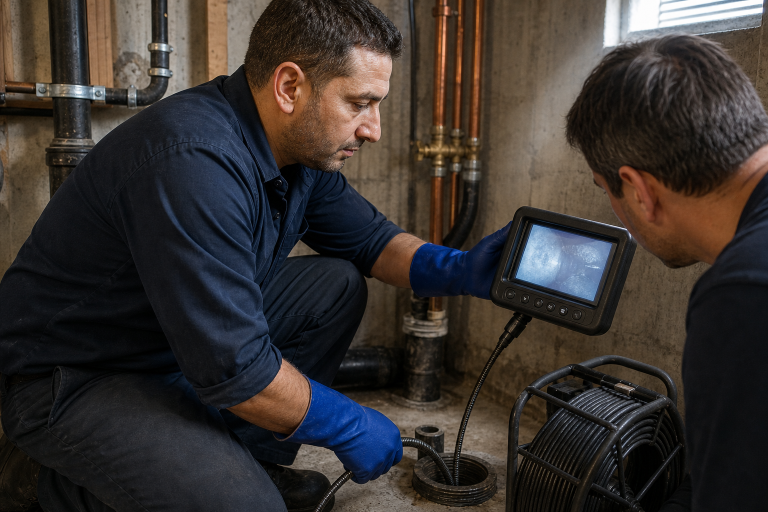
Two other small-problem-becomes-big-bill patterns worth naming while we are here, because hard water accelerates both. Repeated drain cleaner in a slow drain: the lye attacks the rubber gaskets in the trap and a minor clog becomes a $400 trap replacement, which is why we would rather run a cable or a camera. And a toilet that refills slowly: that is usually a $35 fill valve, but ignored it lets the tank rock on its seal and turns into a $300 plus tank-to-bowl gasket job. Neither is glamorous. Both are avoidable.
If your well is acting up seasonally, on a cottage property near Lefroy or an unheated setup you close in November, the softener conversation gets tied to winterizing and to how the whole system is drained and restarted. Salt does not freeze, but brine lines and drain lines do. We plan that during the install, not in January.
Frequently Asked Questions
Can softener brine discharge go into my septic system on a rural Innisfil property?
Softener brine discharge to a private septic system is common practice on rural properties in Innisfil and Simcoe County, but the acceptable termination depends on your municipality and the condition of your septic field. A high-efficiency, demand-initiated softener discharges far less brine per regeneration than an old time-clock unit, which matters if your field is aging. Confirm the requirement for your specific property with your plumber and against the Ontario Building Code before the drain line is set.
My new softener is installed but the water still feels hard. What went wrong?
A newly installed softener that still delivers hard water almost always comes down to one of four things: the bypass valve is still in bypass position, the control head was programmed with the wrong hardness number, the unit is undersized for the household’s peak demand, or there is enough iron in the well to be fouling the resin bed. Test at a treated cold tap, then check bypass position first because it takes ten seconds. If the number has not moved after a forced manual regeneration, the sizing or the resin is the issue.
Should I keep the old softener and just replace the control valve?
Replacing the control valve on a softener tank makes sense when the resin bed is still healthy, which on well water in Simcoe County usually means a unit under roughly ten to twelve years old with a working sediment pre-filter ahead of it. On a twenty-year-old tank fed unfiltered well water, the resin is typically fouled and the valve swap is money spent on a dying system. We open the tank and look before recommending either way.
Do I need a water test before booking a water softener installation on well water?
Yes, a water test is required before any honest water softener installation on a rural property in Stroud, Innisfil or anywhere on well water, because hardness in grains per gallon is the input that sizes the unit. We test hardness, iron and pH on site, and Simcoe County residents can submit a separate bacteriological sample through the Simcoe Muskoka District Health Unit at no charge. Anyone quoting a softener sight unseen without a hardness number is guessing with your money.
Sources
- Plumbing installation requirements and indirect connection principles in Ontario — Ontario Building Code, O. Reg. 332/12
- Private well water testing for Simcoe County residents — Simcoe Muskoka District Health Unit
- National drinking water quality parameters, including hardness guidance — Health Canada, Guidelines for Canadian Drinking Water Quality
- Water hardness classification scale in grains per gallon — Water Quality Association
Allain Plumbing
Book a Well Water Hardness Test and Softener Quote in Stroud →