

A Customer Asked: “Our Alcona Well Water Smells Like Rotten Eggs — Is That a Plumbing Problem or a Water Quality Problem?”
Last updated: August 21, 2026
Published August 21, 2026 · Updated August 21, 2026
A rotten egg smell in well water is hydrogen sulfide gas, and in Simcoe County it comes from one of three places: sulfur-bearing groundwater, sulfate-reducing bacteria living in the well or plumbing, or a chemical reaction between the magnesium anode rod inside your water heater and the sulfates already in your water. If the smell is only on the hot side, it is a water heater problem and it is usually the cheapest fix on this page. If it is on both hot and cold, it is a water quality problem and it needs treatment at the well, not a plumber swapping parts.
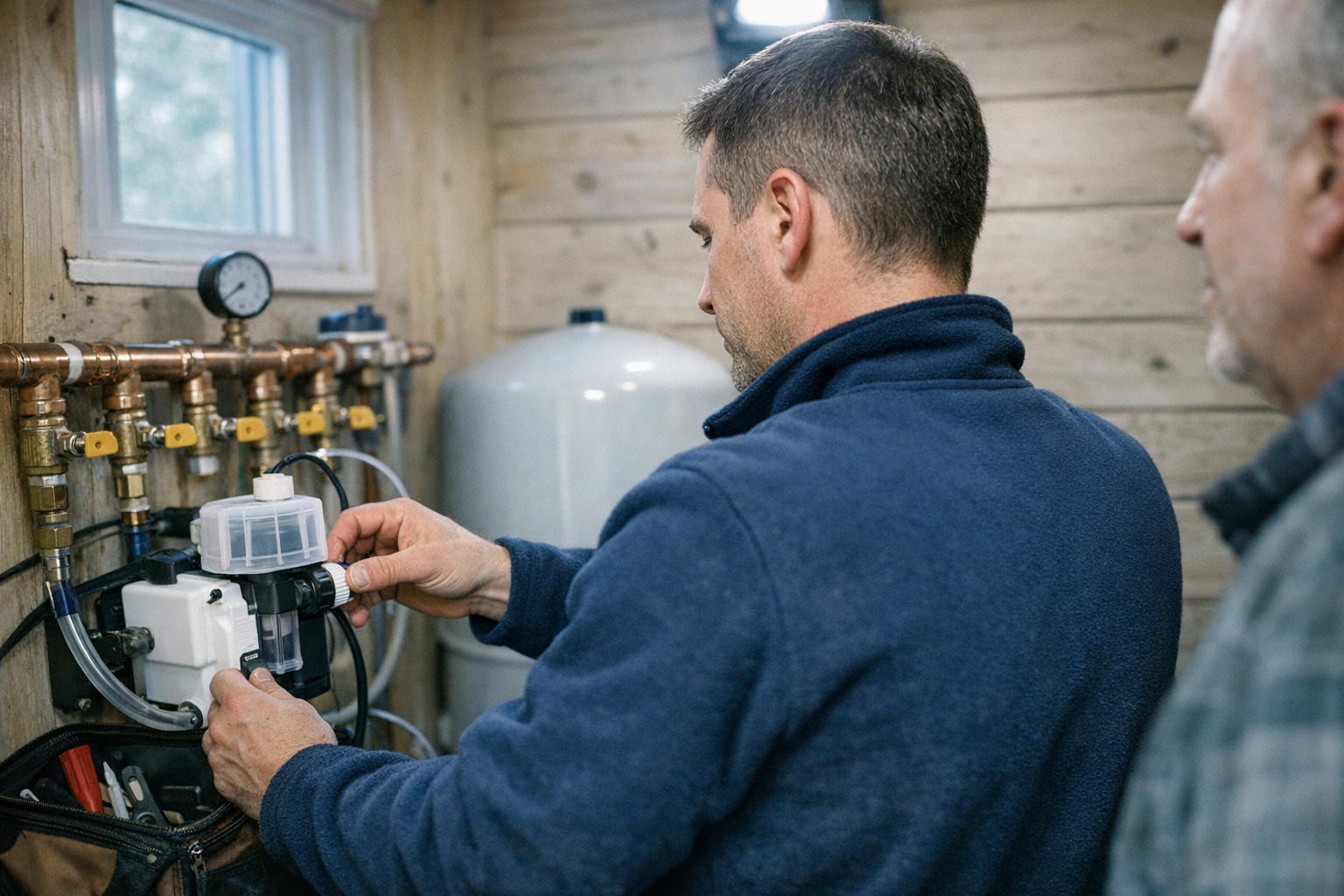
- Hot water only means the anode rod in your tank, not your well. Typical anode swap in our region runs about $185 to $390 depending on the tank and clearance.
- Hot and cold both means hydrogen sulfide or sulfur bacteria in the source water. That needs shock chlorination first, then treatment if it returns.
- One fixture only is almost never the water. It is biofilm in a drain, a dried-out trap, or a venting issue.
- A water softener does not remove rotten egg smell, and in some Innisfil homes it makes it noticeably worse.
- Sulfur bacteria are a nuisance, not usually a health hazard, but a new smell is a reason to run a free bacteriological test through your local health unit.
- If you smell rotten eggs in the air rather than the water, treat it as a possible gas leak and call the gas utility from outside.
The Short Answer
When your well water smells like rotten eggs in Alcona or anywhere around Innisfil, what causes it is hydrogen sulfide gas, and the location of the smell tells you which trade problem you actually have. Run the cold tap at the kitchen sink for a full minute and fill a glass. Walk it into another room, away from the sink, and smell it there. If the glass is clean and only the sink area stinks, your water is fine and you have a drain or vent issue.
If the glass smells, repeat it with hot water. Hot-only means the magnesium anode rod inside your water heater is reacting with sulfates in the well water and generating the gas right there in the tank. Both hot and cold means the sulfide is arriving from the aquifer or from bacteria colonizing the well, the pressure tank, or the softener, and that is a water quality job that starts with a shock chlorination and a lab test.
Hot water only equals water heater. Hot and cold equals well or treatment equipment. One fixture only equals drain or vent. Those three sentences sort about every rotten egg call we take between Lefroy and Cookstown.
The Full Answer
If you are an Alcona, Lefroy or Stroud homeowner on a private well and you just caught a whiff off the kitchen tap while filling the kettle on a cold morning, this section is written for you. It is not written for someone on municipal water in downtown Barrie, because the causes and the fixes are genuinely different once there is a well casing and a pressure tank in the picture.
Step One: Find Out Where the Smell Actually Lives
Honestly, the first thing we do on a sulfur call is not a test kit. It is a glass of water and a walk to the next room. Hydrogen sulfide is heavier than air and it pools in a sink bowl, so people constantly mistake a stinking drain for stinking water.
Run cold water for 60 seconds, fill a glass, walk away
Smell the glass in another room. No smell in the glass means the water is not the problem.
Repeat with hot water from the same tap
Hot smells, cold does not? Your water heater is manufacturing the gas. Stop looking at the well.
Test the outside hose bib
On most rural setups the exterior spigot is plumbed ahead of the softener. If the hose bib is clean and the indoor cold is not, suspect the softener or a treatment tank.
Check whether it is one fixture or the whole house
A single guest bathroom that stinks and nothing else is a trap or vent problem, full stop.
Note when it started
After heavy rain, after a spring re-opening, after a new softener, or after the tank was replaced? Each of those points at a different cause.
“Half the rotten egg calls we run in Innisfil never needed a water treatment quote. They needed an anode rod, or a trap that had gone dry in a bathroom nobody uses. The other half were real sulfur water, and those homeowners had already spent money on the wrong equipment because a salesperson led with a softener.” – Matthew Allain, Licensed plumber and owner, Allain Plumbing and Drains
Cause A: Hydrogen Sulfide Dissolved in the Aquifer Itself
Hydrogen sulfide occurs naturally in groundwater across Simcoe County, and it is most common in wells drawing from low-oxygen zones where organic material is breaking down in the sediment. Glacial deposits, buried peat and organic-rich layers all feed the process. The gas is not manufactured by your plumbing at all in this case, it is simply riding up the drop pipe with the water.
You can usually tell geological sulfide by consistency. It smells the same in January and July, the same at 6 a.m. and 6 p.m., and it is present on hot and cold at every fixture in the house. It does not spike after a rainstorm and it does not go away for a month after a shock chlorination.
Steady, source-water sulfide is the one case where you genuinely do need treatment equipment. Chlorinating the well over and over will not help, because you are not killing anything. The gas is in the aquifer.
Cause B: Sulfate-Reducing Bacteria in the Well, Pressure Tank or Softener
Sulfur bacteria are non-pathogenic organisms that live without oxygen and convert sulfates in the water into hydrogen sulfide gas as a waste product. They colonize the wet, dark, low-flow parts of a rural water system: the bottom of the well casing, the inside of an aging pressure tank bladder, the resin bed of a softener, and the dead legs of pipe feeding a laundry tub nobody uses.
Bacterial sulfide behaves differently from geological sulfide. It comes and goes. It is often worse first thing in the morning after the water has sat overnight, worse in a rarely-used upstairs bathroom, and worse in late summer when the water table drops. That morning-only, upstairs-only pattern in the original question is a classic bacterial signature.
This is also the version that responds to shock chlorination. It is also the version that tends to come back, because unless you fix the reason the bacteria got in, they recolonize.
While the well cap is off, look at it. A cracked cap, a missing vermin screen or a casing that sits below grade where surface water pools is how bacteria get in every single time. Fixing the cap is worth more than a second round of bleach.
Cause C: The Anode Rod in Your Water Heater (Hot Side Only)
Every glass-lined tank water heater, whether it is a Bradford White, a Rheem or anything else on the market, contains a sacrificial anode rod that corrodes so the steel tank does not. Most factory rods are magnesium. Magnesium is highly reactive, and in well water carrying sulfates, that reaction releases hydrogen sulfide inside the tank. You get rotten egg hot water while the cold stays perfectly clean.
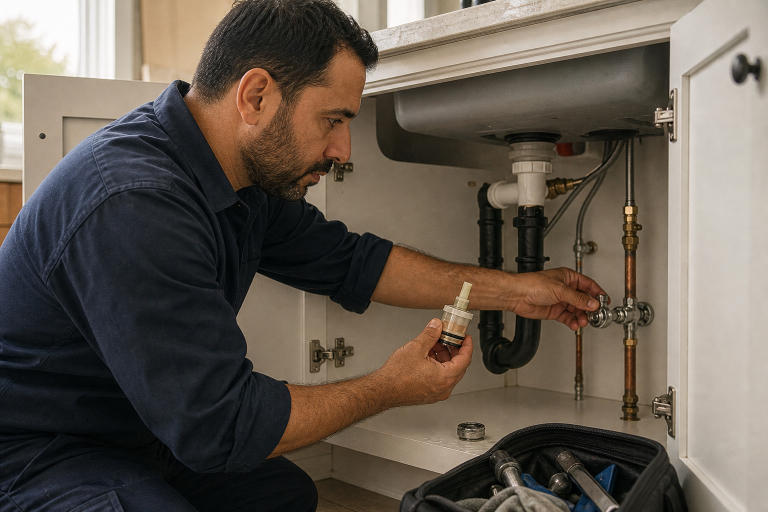
The standard fix is swapping the magnesium rod for an aluminum-zinc alloy rod, which is far less reactive, or fitting a powered impressed-current anode on a tank that will stay in service a while. What you must not do is pull the rod and leave the port plugged. The tank will rust out early and you will void the warranty at the same time.
Typical cost in our region for an anode rod replacement runs roughly $185 to $390 depending on the tank, the rod type and whether there is enough headroom in the utility room to get a straight rod out. Low basement ceilings in older Stroud and Cookstown farmhouses often mean a segmented flexible rod instead. That is a category-norm range, not a quote.
Cause D: The Water Softener as an Amplifier
A water softener removes hardness minerals. It does not remove hydrogen sulfide, and nobody should sell you one as a rotten egg fix. What a softener can do is make the smell worse in two ways, and both are common in Innisfil and Bradford homes running well water through older equipment.
First, the resin bed is a warm, damp, nutrient-rich surface with slow flow through the middle of the night. Sulfur bacteria love it. Second, some rock salt carries sulfate as an impurity, which feeds those bacteria directly. Switching to a cleaner solar or evaporated salt is a small change that occasionally makes a real difference.
If the outside hose bib runs clean and the indoor cold stinks, the softener is your suspect. Sanitizing the resin bed and the brine tank comes before anyone quotes you new equipment. Our water softener and well water service work almost always starts with proving which vessel the smell is coming out of.
Cause E: It Is Not the Water at All, It Is the Drain or the Vent
Sewer gas smells like rotten eggs too, and a drain full of biofilm smells almost identical to sulfur water when you are leaning over the sink. Hair, soap fat and skin cells build a slime layer on the inside of a lavatory tailpiece, anaerobic bacteria set up shop in it, and the sink exhales every time you run hot water past it.
The other version is a dry trap. In a seasonal Lake Simcoe property, a spare bathroom, a floor drain or a basement laundry tub that goes unused for weeks, the water seal in the P-trap evaporates and the vent stack pipes raw sewer gas straight into the room. Pour a couple of litres of water down every unused drain in the house and see what happens over the next day.
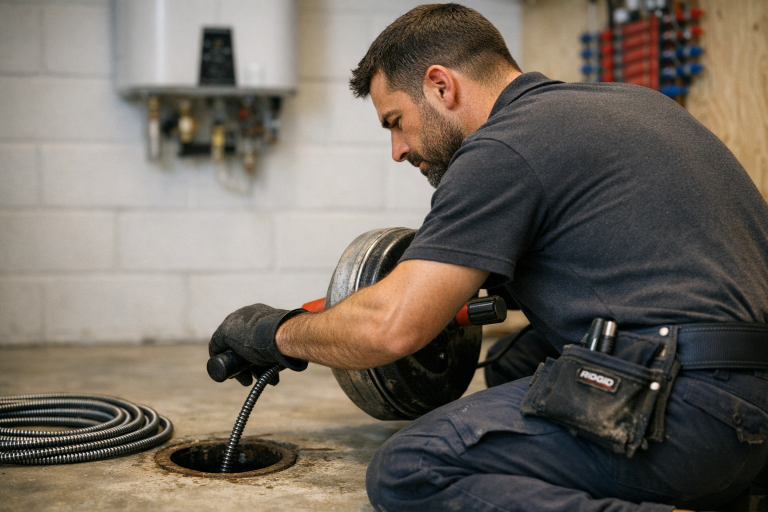
If the smell survives a proper cleaning and the traps are all wet, the next step is a look at the venting. A partially blocked or frost-closed vent stack in a Midhurst or Orillia winter will siphon traps dry and push gas back into the house. That is when a camera in the line earns its keep, and it is exactly what our drain cleaning and camera inspection service is for. You watch the screen with us.
The Fix Ladder: What Actually Works, and Typical Cost Tiers
| Symptom pattern | Most likely cause | First move | Typical range (category norm) |
|---|---|---|---|
| Hot water only, all fixtures | Magnesium anode reacting with sulfates | Aluminum-zinc anode swap, flush and sanitize tank | $185 to $390 |
| Hot and cold, comes and goes, worse in the morning | Sulfur bacteria in well or pressure tank | Shock chlorination, well cap inspection, bacteriological test | $240 to $480 |
| Hot and cold, constant year round | Hydrogen sulfide in the aquifer | Air injection oxidizing filter or chlorine injection plus carbon | $1,700 to $4,600 installed |
| Indoor cold stinks, outdoor hose bib clean | Softener resin bed or treatment vessel | Sanitize resin and brine tank, switch salt type | $165 to $340 |
| One fixture only, glass of water is clean | Biofilm, dry trap or vent issue | Mechanical drain cleaning, refill traps, camera the vent if it persists | $190 to $420 |
Those are honest regional category ranges to help you budget, not Allain Plumbing’s price list. Every well is different and we quote upfront after we see the system.
One more thing on equipment. If you are replacing a water heater on sulfur water and thinking about going tankless, buy a serviceable unit. We recommend Rinnai or Navien from day one, because the cheap import units around the $1,500 mark have parts nobody in Simcoe County stocks, and a heat exchanger fouled by untreated water is not a part you want to wait three weeks for.
When the Answer Is Different
A rotten egg smell in Alcona and Innisfil well water usually follows the patterns above, but there are five situations where the diagnosis changes completely. These are the ones that catch people out.
You smell it in the air, not the water
Natural gas and propane are odourized with mercaptan, which smells like rotten eggs or sulfur. If the odour is in the room rather than at the tap, particularly near a furnace, water heater or range, do not troubleshoot it. Get everyone outside, leave the door open, do not flip switches, and call the gas utility’s emergency line from outdoors.
The seasonal property reopening in spring
For the seasonal owner opening a Lake Simcoe or Orillia-area cottage after five months closed up, a sulfur smell on the first weekend is expected, not alarming. Stagnant water in the pressure tank, the water heater and every dead leg of pipe goes anaerobic over the winter. Flush the entire system hard, run every fixture until the water is cold and clear, drain and refill the water heater, and re-test after a week before you spend a dollar on treatment.
The smell shows up only after heavy rain or snowmelt
Odour that spikes after a March melt or a heavy August storm is a red flag for surface water reaching the well. That is a different conversation than sulfur. Test for total coliform and E. coli immediately, stop drinking the water until results come back, and have the well cap, casing height and grading around the wellhead inspected.
Newer Alcona subdivision homes with a hybrid history
Some properties around the edges of Alcona and Stroud have been through a transition, where a municipal service was brought in but the old well plumbing, pressure tank or an abandoned treatment vessel was left in place and never fully disconnected. A capped-off but still-connected dead leg full of stagnant water will breed sulfide bacteria and feed it back into the house. If your home has old well hardware sitting in the utility room and you are now on town water, that hardware needs to come out of the loop properly, not just be valved off.
Black staining, corroded fittings or silverware tarnishing
Hydrogen sulfide is corrosive. When we see black slime in the toilet tank, tarnished silverware, black specks in the aerators and pitted brass fittings alongside the smell, the sulfide has been present long enough to be attacking the plumbing itself. On older galvanized systems that combination is often the start of a re-pipe conversation, because treating the water will not restore pipe that has already been eaten from the inside.
FAQ
Will a water softener remove the rotten egg smell from my Innisfil well water?
A water softener will not remove hydrogen sulfide from well water in Innisfil or anywhere else, because softeners exchange hardness minerals and do nothing to dissolved gas. In some homes the resin bed actually harbours sulfur bacteria and makes the odour worse overnight. Removing rotten egg smell needs oxidation, typically an air injection filter or a chlorine injection system with a carbon filter behind it, in the $1,700 to $4,600 installed range regionally.
Does shock chlorination permanently fix a rotten egg smell in a well?
Shock chlorination fixes bacterial sulfide temporarily, and in our experience the odour returns within weeks to a few months if the entry point is never found. It does nothing at all for hydrogen sulfide that is geologically present in the aquifer. Treat the shock as a diagnostic as much as a cure: if the smell disappears and stays gone, you had bacteria and you need to fix the well cap, casing or grading that let them in.
Why does only my hot water smell like rotten eggs in Alcona?
Hot-water-only rotten egg smell in Alcona homes is almost always the magnesium sacrificial anode rod inside the water heater reacting with sulfates in well water and generating hydrogen sulfide in the tank. Replacing it with an aluminum-zinc alloy rod, or fitting a powered anode, typically resolves it for $185 to $390 in this region. Never simply remove the anode and cap the port, because the tank will corrode early and the manufacturer warranty on a Bradford White or Rheem tank is void without it.
How do I get my well water tested in Simcoe County?
Private well owners in Innisfil, Barrie, Bradford and the rest of Simcoe County can get free bacteriological testing for total coliform and E. coli through Public Health Ontario, with sample bottles and drop-off locations coordinated by the Simcoe Muskoka District Health Unit. That free test covers bacteria only, so sulfide, sulfate, iron and hardness need a private lab or a treatment company’s water analysis. Test any time the taste, smell or colour of your well water changes, and after any well repair.
Sources
- Free bacteriological testing of private well water in Ontario – Public Health Ontario
- Local sample bottle pickup and drop-off locations for Simcoe County well owners – Simcoe Muskoka District Health Unit
- Private well construction, maintenance and wellhead protection requirements in Ontario – Government of Ontario
- What to do if you smell rotten eggs or sulfur in the air rather than the water – Enbridge Gas Safety
Allain Plumbing
Have a similar question about your well, your softener or a smell you cannot place? We are owner-operated, licensed and insured, serving Innisfil, Alcona, Stroud, Barrie, Bradford, Cookstown, Angus, Alliston, Midhurst, Newmarket, Aurora and Orillia. Upfront pricing, 24/7 emergency service, and you watch the screen when the camera goes in the line.